


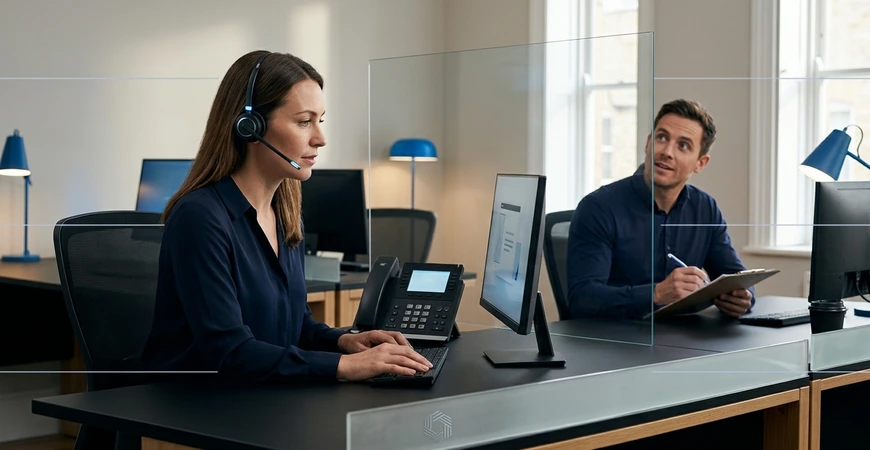
AI receptionist or call answering service: which fits your business?

An AI receptionist is usually the better fit when you need dependable coverage, consistent questions, appointment booking and structured handoff into business systems. A traditional call answering service may suit businesses that prefer every interaction to begin with a person. Many SMEs benefit from a blended model: AI handles routine calls and capture, while people take over complex, sensitive or high-value conversations.
The right choice is not simply human versus technology. It is about what callers need, what your team must receive after each call and where judgement or empathy becomes essential. This guide compares the two approaches so you can design a calmer, more reliable first response.
What is an AI receptionist?
An AI receptionist answers business calls using an agreed voice, knowledge base and call flow. It can ask approved questions, capture contact details, identify the reason for a call, answer routine queries, arrange a booking, route a call or create a follow-up task. The useful part is not the voice alone; it is the structured action that follows the conversation.
Ostina's Vox AI receptionist is designed around that joined-up workflow. Routine calls can move consistently while exceptions and important conversations reach the right person with useful context.
What is a traditional call answering service?
A traditional call answering service uses people, often in an external contact centre, to answer calls in your company name and take a message or follow a script. The human first response can be valuable where the caller's situation is unpredictable, emotional or commercially sensitive.
The quality of either option depends on preparation. A person without current information can still give an inconsistent answer, while an AI receptionist without clear knowledge and escalation rules can frustrate callers. Accurate information, ownership and handoff matter more than the label.

AI receptionist versus call answering: the practical comparison
| Decision area | AI receptionist | Traditional call answering |
|---|---|---|
| Availability | Can provide continuous coverage when configured for it. | Coverage depends on the service hours and purchased plan. |
| Call capacity | Can handle several routine calls at the same time. | Capacity depends on the number of available call handlers. |
| Consistency | Uses the same approved questions, knowledge and routing rules. | Relies on training, scripts and the judgement of each call handler. |
| Business actions | Can create structured notes, bookings, tasks and system updates when connected correctly. | Often takes and sends a message, although some services offer wider actions. |
| Empathy and judgement | Should hand over calls that are sensitive, unusual or outside its approved scope. | A person can adapt naturally from the start of a complex conversation. |
| Improvement | Call outcomes and exceptions can be reviewed to refine the workflow. | Quality is improved through training, monitoring and service feedback. |
Choose an AI receptionist when
- You lose enquiries outside office hours or when the team is busy.
- The same questions are asked on many calls.
- You need call details to arrive in a consistent, usable format.
- Bookings, routing or follow-up tasks should happen immediately.
- You want coverage to scale without placing more pressure on existing staff.
Choose a traditional answering service when
- Most calls are sensitive, emotional or difficult to predict.
- Human judgement is required before even basic information can be collected.
- Your systems are not ready for reliable automated handoff.
- Your customers strongly prefer a person from the first greeting and call volume is manageable.
Why a blended approach often works best
A blended design protects the strengths of both approaches. AI provides a dependable first line for routine calls, while people retain conversations where empathy, negotiation or professional judgement matters. UK government work on AI adoption has similarly highlighted first-line support with easy transfer to human staff, rather than treating every interaction as suitable for automation.
For example, a service business might let AI answer opening-hours questions, capture new enquiries and arrange standard appointments. Complaints, vulnerable callers, unusual technical questions and high-value opportunities can transfer immediately or receive a priority callback from a named person.
Six questions to ask before choosing
- Which calls are genuinely repetitive? Group recent calls by reason, urgency and outcome.
- What must happen after each call? Define the message, booking, task, transfer or update your team needs.
- Where is human judgement essential? Protect complaints, safeguarding, negotiation and unusual requests with clear escalation.
- What information is approved? Use one maintained source for services, availability, locations and common answers.
- How will callers be informed? Keep disclosure simple and explain recording or personal-data use where relevant.
- How will quality be measured? Review missed intent, failed handoffs, caller feedback, response time and completed next actions.
How to introduce an AI receptionist safely
Start with a narrow call group and an obvious human route. Write the approved answers, define what the receptionist must never decide and test real variations before making the number public. Your staff should know what will arrive, where it will arrive and who owns the next step.
Be transparent with callers. The Information Commissioner's Office says organisations using AI with personal data need to explain their purposes, retention and sharing. If calls are recorded, tell people and define why the recording is necessary. This is operational guidance rather than legal advice, so businesses should check their own obligations and sector requirements.
A useful pilot lasts long enough to expose common exceptions but remains small enough to correct quickly. Review calls with your team, update the knowledge and escalation rules, and expand only when service quality is steady. Ostina's AI readiness and automation audit can help identify the right first call flow before implementation.
Once you have chosen the service model, use our AI receptionist capability checklist and 12-call acceptance test to define the standard a supplier must demonstrate before launch.
Frequently asked questions
Can an AI receptionist transfer a call to a person?
Yes. A well-designed call flow can transfer selected calls immediately or create a clear callback task with the caller's reason, details and urgency. The escalation rules should be agreed and tested before launch.
Should callers be told they are speaking to AI?
Yes. Clear disclosure builds trust and supports transparent handling of personal information. The introduction should be simple, honest and followed by an easy route to a person when needed.
Does an AI receptionist have to record every call?
No. Recording depends on the purpose and configuration. If calls are recorded, the business should define a lawful purpose, tell callers, limit retention and reflect the process in its privacy information.
Can an AI receptionist book appointments?
It can when the approved workflow is connected to the relevant diary or booking system. Rules for service type, availability, confirmation and exceptions should be tested carefully.
Which option is best for a small business?
An AI receptionist often fits businesses that need dependable coverage and structured actions. A traditional service may suit calls that need human judgement from the first moment. Many SMEs use a blended model so routine calls are handled consistently and people take over where they add value.
Sources and further reading
- ICO guidance on transparency when AI processes personal data.
- ICO guidance on telephone call monitoring and recording.
- UK AI Adoption Plan for Professional and Business Services.
The practical next step
Review a week of calls and mark which ones are routine, which need a person and what useful action should follow. That simple map will show whether AI, a traditional answering service or a blended model is the strongest fit. If routine coverage and joined-up follow-up are the main gaps, explore Vox for AI call answering or start an AI automation plan with Ostina.
